Positive Stories: An Exhibition and More
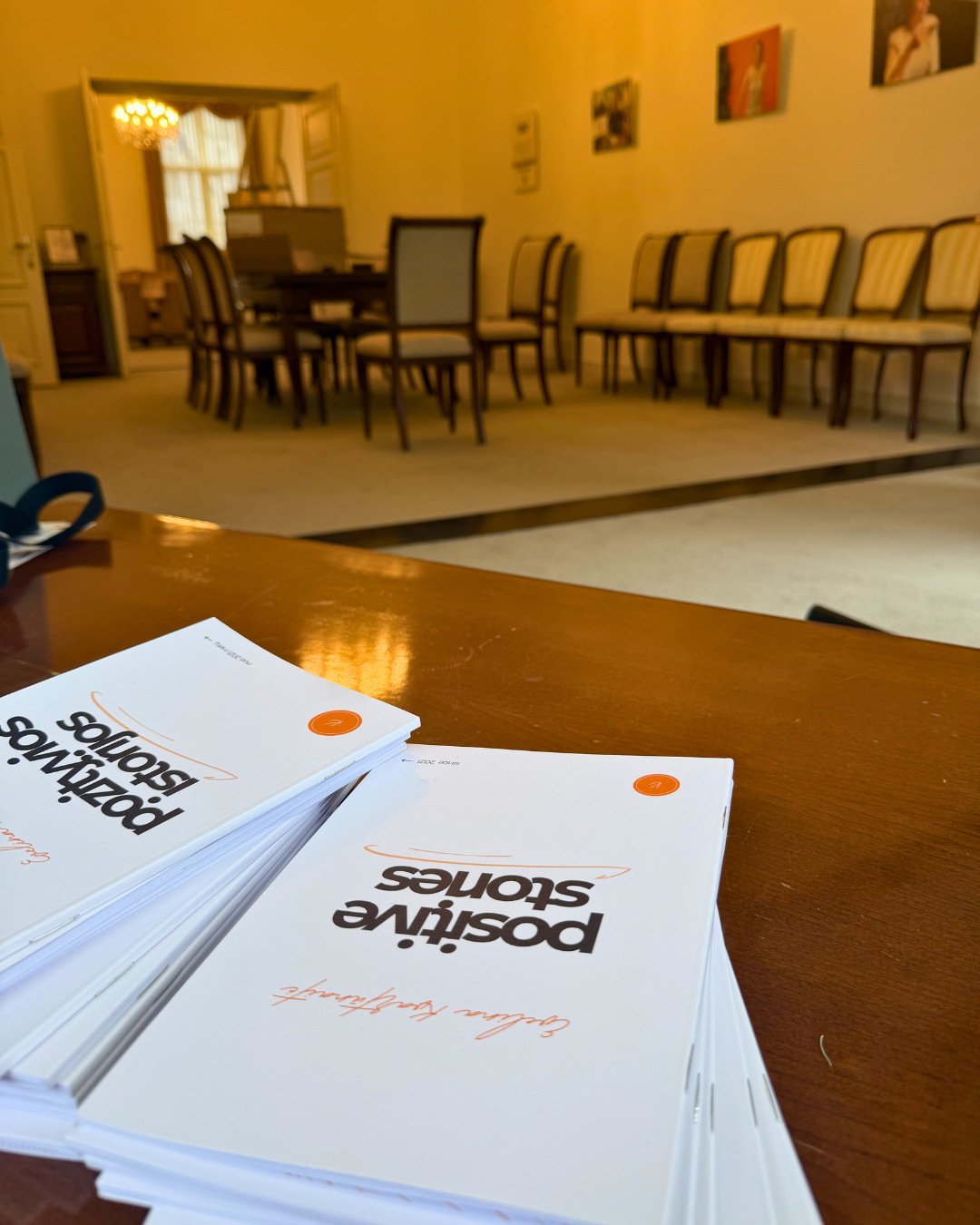
Although paper brochures contain both Lithuanian and English version, digitally you can find them separately.
You can find the English version here.
You can find the Lithuanian version here.
When I began Positive Stories in 2021, I knew that photography would be at the heart of the project. Portraits have a unique power - they allow us to pause, to look into someone’s eyes, to sense strength, vulnerability, and depth without a single word being spoken. When it came to realization of the exhibition ever so wonderfully in collaboration with the Embassy of the Republic of Lithuania to the Kingdom of the Netherlands, which focuses on women connected to the Netherlands, I came to understand that the image alone, while powerful, was not enough.
It opens tomorrow - March 8 - International Women’s Day — and resonates deeply with the spirit of March 11, the re-establishment of Lithuanian independence. The timing is symbolic: it honors both collective national resilience and the individual courage of women shaping their lives across borders.
Photography remains the visual anchor of the exhibition. Each portrait is created through conversation and presence. I do not approach these women as distant subjects; I meet them in dialogue first. The camera enters only after trust has been established. What emerges is not a posed representation, but a moment of authenticity - a visual trace of lived experience.
Yet I felt strongly that the exhibition needed something more intimate alongside the images. A photograph invites interpretation, but it does not always provide context. As viewers may wonder: Why did she leave? What drives her? How does she understand home now? What does balance, ambition, or belonging mean in her life? And certainly all those answers can be found in the interview that is available on my website on this blog however it was important to me to also showcase some exciting thoughts and ideas of each of them. This is why I created a companion brochure.
The brochure serves as a quiet extension of the portraits. It holds fragments of conversation, personal reflections, and essential context about each woman participating. It allows visitors to move beyond observation into understanding. While the portraits speak visually, the brochure preserves voice. Together, they create a fuller encounter.
For me, this dual format is essential. Diaspora stories are layered. Migration is not a single event; it is an ongoing process of adaptation, negotiation, reinvention, and growth. To honour that complexity, I wanted both the stillness of the image and the texture of language.
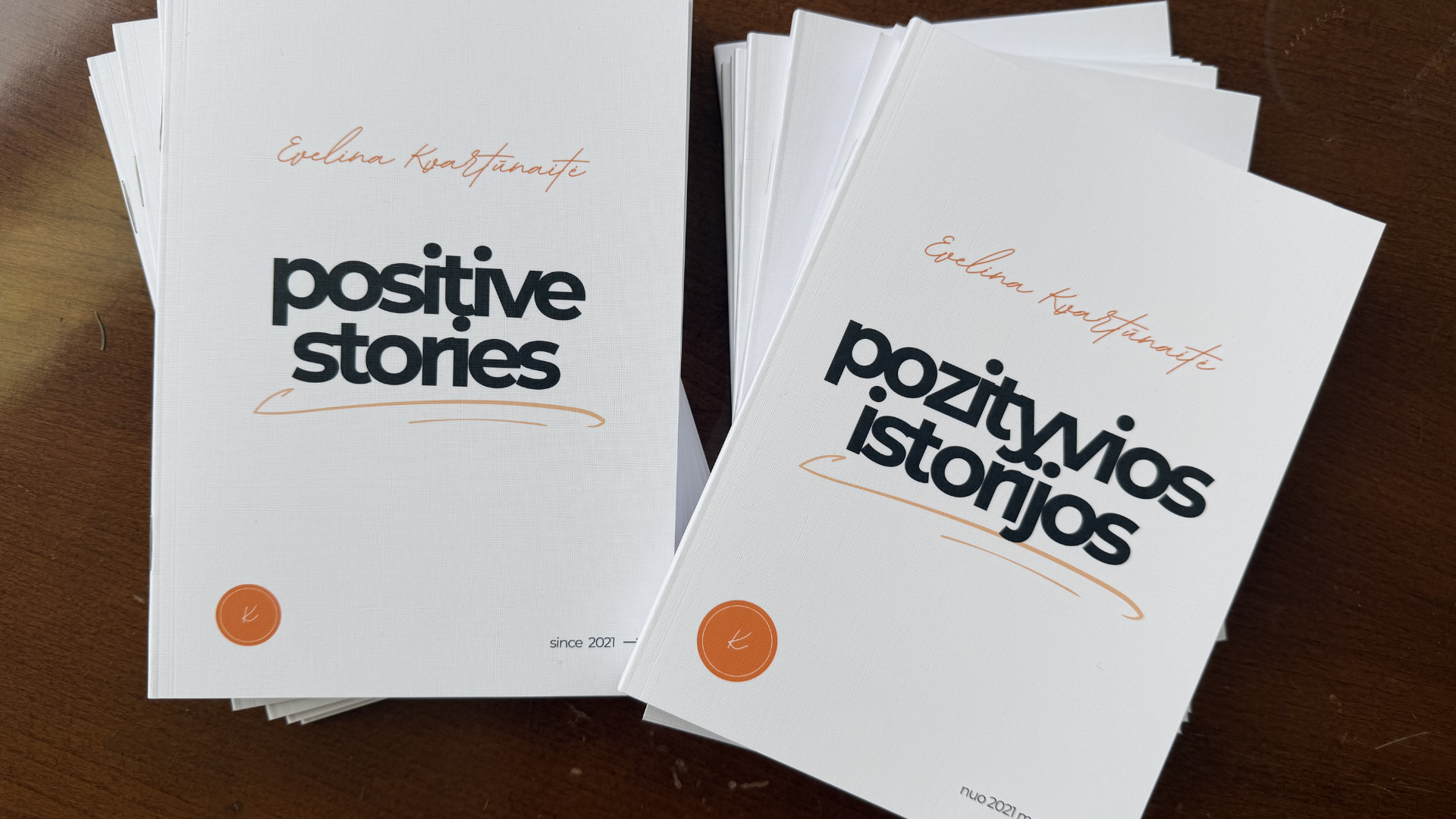
The brochure also adds something deeply human to the exhibition space. It carries personality — not in a decorative sense, but in the way it allows each woman to remain present through her own words. It prevents the exhibition from becoming abstract. Instead, it stays relational.
Positive Stories has always been about more than documentation. It is about visibility. It is about acknowledging that Lithuanian identity does not end at national borders. It evolves wherever Lithuanian women build careers, raise families, create art, lead organisations, or quietly transform their communities.
This exhibition is therefore not only a display of portraits. It is a conversation space — between image and text, between homeland and host country, between viewer and participant.
And for me personally, ensuring that the exhibition included both photography and a written companion was a way of honouring the women fully - not only how they appear, but how they think, reflect, and define their own stories. Because visibility without voice is incomplete. And stories deserve both.
Although paper brochures contain both Lithuanian and English version, digitally you can find them separately.
You can find the English version here.
You can find the Lithuanian version here.