Little Steps: Rest

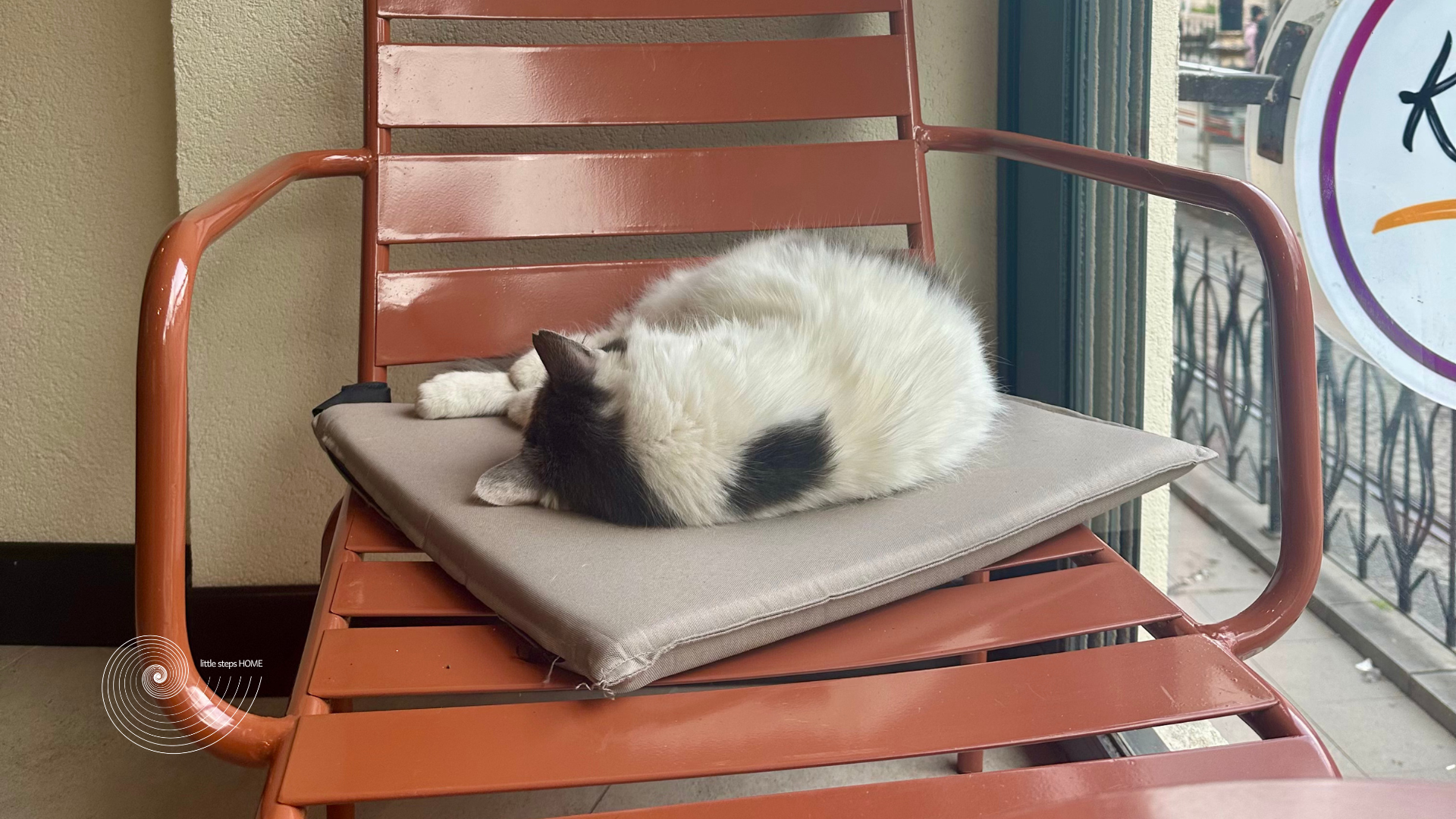
For a long time, I thought rest was something you had to earn. That it came only after everything else was done, once the list was completed, the emails answered, the day justified. When life feels full - or overwhelming - rest often becomes the first thing we postpone. And yet, the more I observe myself and the people around me, the clearer it becomes: rest is not the opposite of productivity, nor is it a reward. It is a basic human need, and without it, everything else quietly begins to fray. Last month when I was in Istanbul, I observed how beautifully cats just indulge in it so it made me think more on this topic.
As I think what complicates rest is not only lack of time, but the way we imagine it. We often picture rest as something large and unreachable - a full day off, a retreat, a holiday, uninterrupted sleep. When those aren’t available, we convince ourselves that rest is impossible. But research, and lived experience, suggest otherwise. Rest does not have to be dramatic to be effective. It can be woven into the smallest moments of an already busy day.
Neuroscience shows us that the brain is not designed for continuous focus. Sustained attention depletes cognitive resources, while brief periods of rest allow the nervous system to reset. Even short pauses - a few minutes of mental disengagement - can restore attention, improve emotional regulation, and reduce stress. This is not indulgence; it is how our biology works.
Rest can begin with micro-moments. A conscious breath before opening your laptop. Letting your shoulders drop while waiting for water to boil. Closing your eyes for thirty seconds between tasks. These moments may seem insignificant, but physiologically they matter. Slow breathing activates the parasympathetic nervous system, signalling safety and reducing cortisol levels. Over time, these signals accumulate, teaching the body that it does not have to remain in constant alert.
There is also rest in sensory shifts. Stepping outside for daylight, even briefly, helps regulate circadian rhythms and supports sleep later in the evening. Changing posture, stretching gently, or resting your gaze away from screens reduces both physical and mental strain. These are not breaks from life - they are ways of staying in it with more care.
Psychology also reminds us that rest is not only physical. Mental rest matters just as much. Allowing the mind to wander, daydream, or simply do nothing for a moment activates what researchers call the “default mode network,” a state linked to emotional processing, memory integration, and creativity. Constant stimulation - scrolling, listening, consuming - prevents this restorative mental state from emerging. Sometimes rest means choosing silence.
What I am learning is that rest does not require permission. It requires attention. Attention to the body’s signals, to the quiet signs of fatigue before they become exhaustion. When we ignore those signals, the body eventually enforces rest through burnout, illness, or emotional collapse. When we listen earlier, rest becomes gentler, more sustainable.
This is why rest feels like a natural part of Little Steps HOME. Because coming home to ourselves is not about pushing harder, but about softening where we can. About recognising that even in full, demanding lives, we are allowed to pause. A minute of rest here. A breath there. A moment of stillness woven into movement.
Rest does not always look like stopping. Sometimes it looks like slowing down. And sometimes, that is enough to bring us back to ourselves.
Annotated Research References
Brosschot, J. F., Gerin, W., & Thayer, J. F. (2006) The perseverative cognition hypothesis: A review of worry, prolonged stress-related physiological activation, and health. Journal of Psychosomatic Research, 60(2), 113–124.
Kaplan, S. (1995) The restorative benefits of nature: Toward an integrative framework. Journal of Environmental Psychology, 15(3), 169–182.
Kabat-Zinn, J. (1990) Full Catastrophe Living. Delacorte.
Nigg, J. T. (2017) Annual Research Review: On the relations among self-regulation, self-control, effortful control, executive function, and inhibitory control. Journal of Child Psychology and Psychiatry, 58(4), 361–383.
Ulrich, R. S., et al. (1991) Stress recovery during exposure to natural and urban environments. Journal of Environmental Psychology, 11(3), 201–230.
Walker, M. (2017) Why We Sleep. Scribner