or The Distance Between Me and Myself

There is a peculiar kind of distance that has nothing to do with geography. I have been thinking about it lately, somewhere between arriving and leaving, between conversations that linger long after they end and places that begin to feel familiar just as it is time to move on. Over the past months, I have travelled through countries, cities, landscapes and experiences. I have spent time with people I have known for years and encountered others whose paths crossed mine only briefly. I have found myself in rooms filled with ideas, unexpected tenderness, discomfort and conversations that stretched beyond their expected endings. There has been so much life. And somewhere in the middle of it, I began noticing something rather strange. I was present for all of it, yet sometimes I felt increasingly far away from myself. Not lost in any dramatic sense. Just distant. As though experiences were flowing through me faster than I could recognise what they were leaving behind. And yet, there is something curious about noticing this distance. If I am aware of feeling far away from myself, then who, exactly, is doing the noticing?
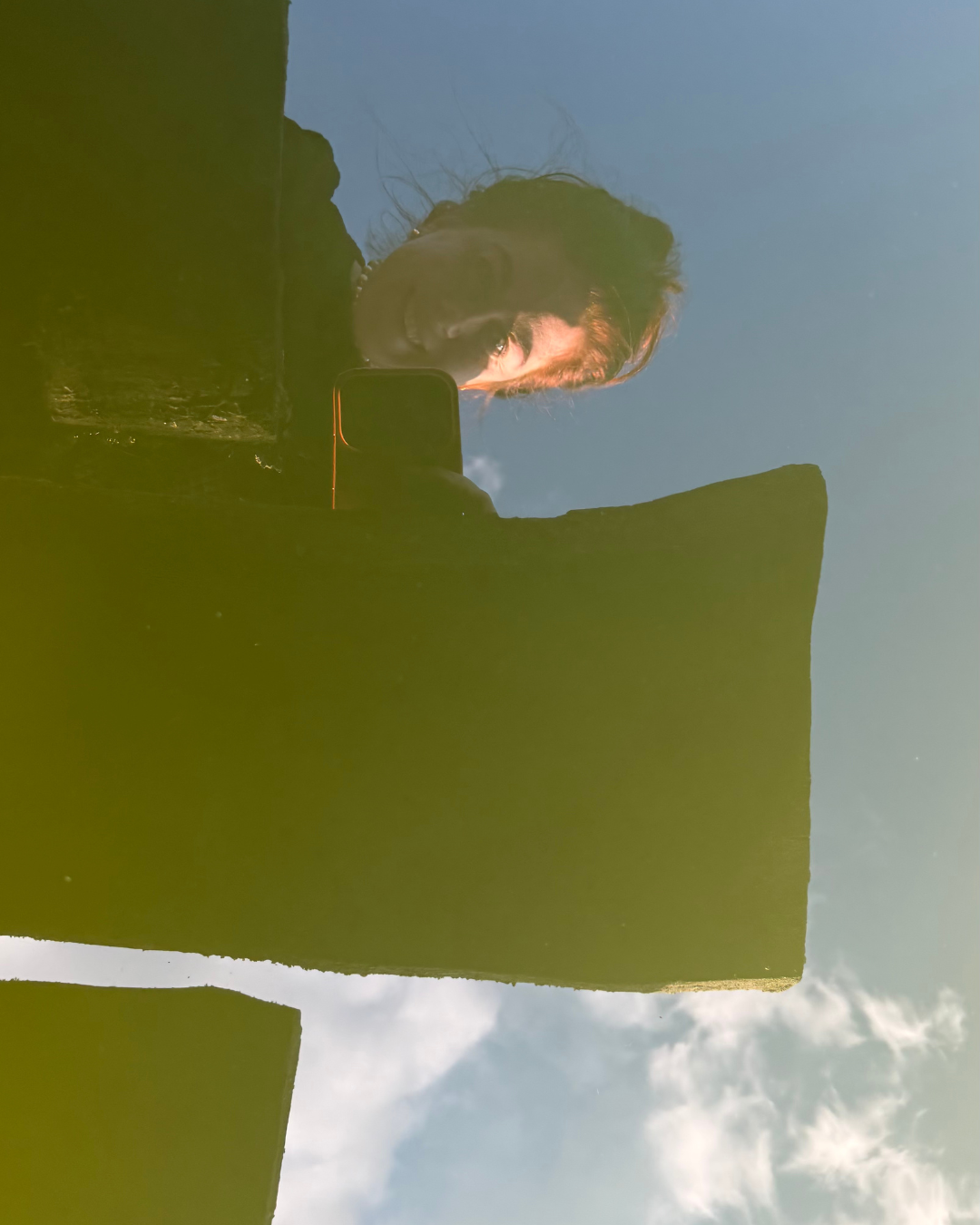
I came across the work of cognitive scientist Jonathan Schooler, who distinguishes between consciousness and meta-consciousness: between having an experience and explicitly recognising that we are having it. We can be immersed in something without necessarily being aware of our own mental state at that moment. Perhaps the distance I have been noticing is not simply between myself and the world, but between living an experience and becoming aware of myself within it. I have always been curious about the world. About people, the stories they carry, the ways we make sense of our existence. I am drawn to unfamiliar places, unexpected encounters and conversations that challenge what I think I know. There is something profoundly beautiful about allowing life to surprise us. Yet I wonder whether there is a difference between being open to life and being endlessly available to it. We celebrate collecting experiences, making memories, broadening horizons. But we speak less about what happens afterwards. About the time it takes for an experience to become understanding, for a feeling to find its place, for something we have lived through to become something we have actually absorbed. Perhaps we are not only moving through experiences. Perhaps experiences are continuously moving through us, rearranging our understanding of who we are. Living between countries adds another layer to this peculiar distance. There are places that hold our histories, places that hold our everyday routines, and places that awaken versions of ourselves we hadn't previously encountered. But if each place brings forward something different, what holds all those versions together?
Psychologists Dan McAdams and Kate McLean describe narrative identity as an evolving story through which we connect our reconstructed past with an imagined future, giving our lives a sense of continuity and purpose. I find this particularly interesting when thinking about belonging. Perhaps continuity doesn't depend on remaining unchanged, but on the stories through which we connect the people we have been with the people we are becoming. There is a rhythm to travelling that I find both exhilarating and disorienting. Packing and unpacking. Finding a temporary routine. Meeting people. Saying goodbye. Moving on. Eventually, movement itself begins to feel familiar. But being comfortable with movement is not necessarily the same as being comfortable with stillness.
Much of my professional life revolves around learning, reflection and creating spaces where people can explore their experiences. Yet lately I have been questioning the way we speak about transformation. We often imagine it happening in moments of revelation. The powerful conversation. The unexpected insight. The experience that unsettles our understanding of the world. But perhaps transformation also requires something less spectacular. Time. Repetition. Silence. I can understand an experience intellectually long before I have made sense of it emotionally. I can explain what I have learned without necessarily having integrated it into the way I live. Perhaps this is simply the difference between knowing something and allowing it to become part of us. And perhaps awareness is a different kind of knowing altogether.
We can spend an extraordinary amount of time examining our lives without necessarily inhabiting them more consciously. Sometimes, in trying so hard to understand life, we find ourselves standing just outside it, observing rather than participating. And perhaps the reverse is equally true: we can become so immersed in living that we lose the perspective needed to recognise what is happening. Somewhere between immersion and observation, perhaps there is another possibility. Not a perfect balance, but a kind of fluid awareness.
What I find most curious about this distance from myself is that it doesn't always announce itself through sadness or dissatisfaction. Sometimes it appears after a meaningful conversation, when I realise I have barely noticed how I am feeling. Or in the silence of returning to an empty room after days surrounded by people. There is no single event to explain it. Only the accumulated sensation of having been everywhere, while not quite knowing where I have been within myself. But perhaps the most interesting thing is that I am noticing.
And I wonder whether this distance is something to overcome at all. Perhaps knowing ourselves is not a destination we eventually reach, but an ongoing relationship with the unfolding experience of being alive. The temptation, of course, is to turn even this into another task. To reflect more, journal more, meditate more, find another framework for becoming better at being present. But perhaps awareness sometimes arrives when we stop trying to make something happen. Not every silence needs filling. Not every feeling needs interpreting. Not every experience needs to become something useful.
I don't think I want a smaller life. I still want to travel, discover, create, learn, meet people, be surprised. I don't want to become less curious or less available to the world. But perhaps I want to become more aware of myself within it. I am beginning to think that presence is not a state we achieve and then maintain. Perhaps it is something we continually move towards and away from. Like travelling, it involves departures and returns. And perhaps there is no final arrival. For now, I am trying to leave a little more space between the things that happen. Not because I want less life. But because I would like to be there for more of it. And perhaps the awareness of that desire is already a kind of homecoming.
References
Schooler, J. W. (2002). Re-representing consciousness: Dissociations between experience and meta-consciousness. Trends in Cognitive Sciences, 6(8), 339–344. https://doi.org/10.1016/S1364-6613(02)01949-6
McAdams, D. P., & McLean, K. C. (2013). Narrative identity. Current Directions in Psychological Science, 22(3), 233–238. https://doi.org/10.1177/0963721413475622