Body and the City
There is a particular kind of knowledge that cannot be explained. It has to be inhabited. As I am here for 4Z. Between Us – Learning as a Relational Practice, module within the international SKAB'ing (Diving into Skills, Knowledge, Attitudes & Behaviours) learning journey, in Weimar, I took part in a workshop led by Nelson Castro - actor, theatre-maker, co-founder of the Chilean theatre company Organismo Teatro, and currently an M.F.A. student in Public Art and New Artistic Strategies at the Bauhaus-Universität Weimar. Rather than teaching through lectures or historical narratives, Nelson invited us into a different way of learning: one rooted in attention, embodiment and collective presence. There was something deeply fitting about experiencing this in Weimar.
Few places have shaped ideas about education as profoundly as this city. It was here that the Bauhaus was founded in 1919 by Walter Gropius with a radical vision: to dissolve the boundaries between art, craft, design and everyday life. Education at the Bauhaus was never intended to remain within the classroom. Students learned by making, experimenting, collaborating and engaging directly with materials, bodies and the environments they inhabited. Although the school later moved to Dessau and Berlin, its educational philosophy continues to influence artists, architects and educators around the world. More than a century later, walking through the streets of Weimar with a group of strangers, I found myself wondering whether this workshop was carrying that same spirit forward - not by recreating Bauhaus traditions, but by extending one of its central questions: How do we learn through experience?
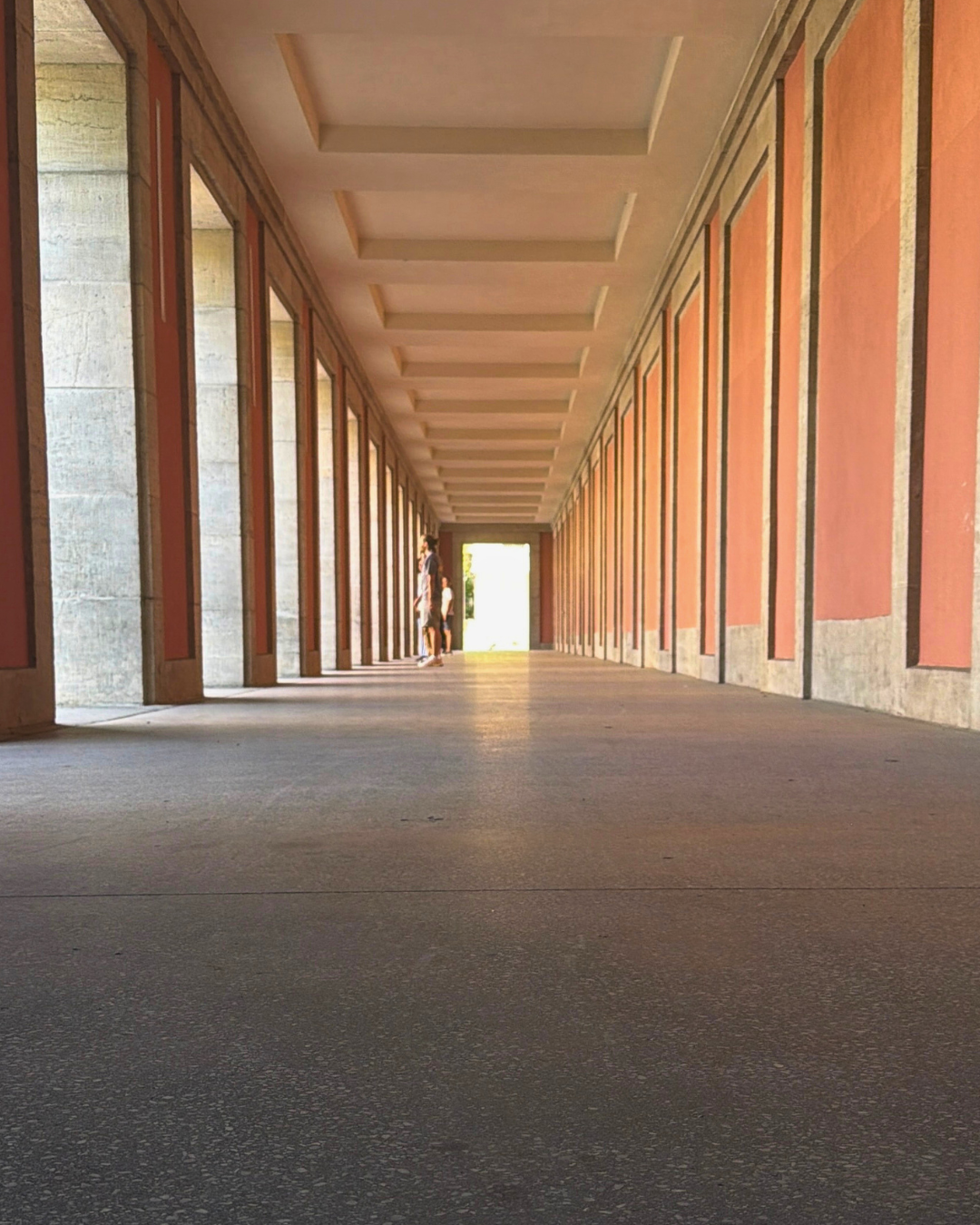
We often imagine that public spaces belong to everyone equally. Yet our bodies know otherwise. Some streets invite us to linger. Others ask us to hurry. Certain squares make us feel visible, while narrow passages encourage disappearance. Architecture is never neutral. Every doorway, every corridor, every distance between buildings quietly choreographs the way we meet - or avoid - one another. Before we consciously decide how to behave, space has already begun suggesting possibilities. The workshop asked us to slow down enough to notice these invisible conversations. Rather than entering the city as observers, we entered it as participants.
Listening became physical. Standing became intentional. The body, usually treated as a vehicle carrying the mind from one destination to another, suddenly became an instrument of perception. It reminded me how rarely we actually inhabit our bodies. Most of our days unfold through screens, schedules and thoughts. We navigate cities with remarkable efficiency while remaining strangely absent from the places we move through. We know where we are going, but often not where we are. We experience public space primarily through purpose: catching a train, buying groceries, arriving somewhere else. The body becomes functional rather than relational. But something shifts when attention returns to the body. Breath slows. Peripheral vision widens. The rhythm of footsteps begins to synchronise with others. Silence becomes something shared rather than empty.
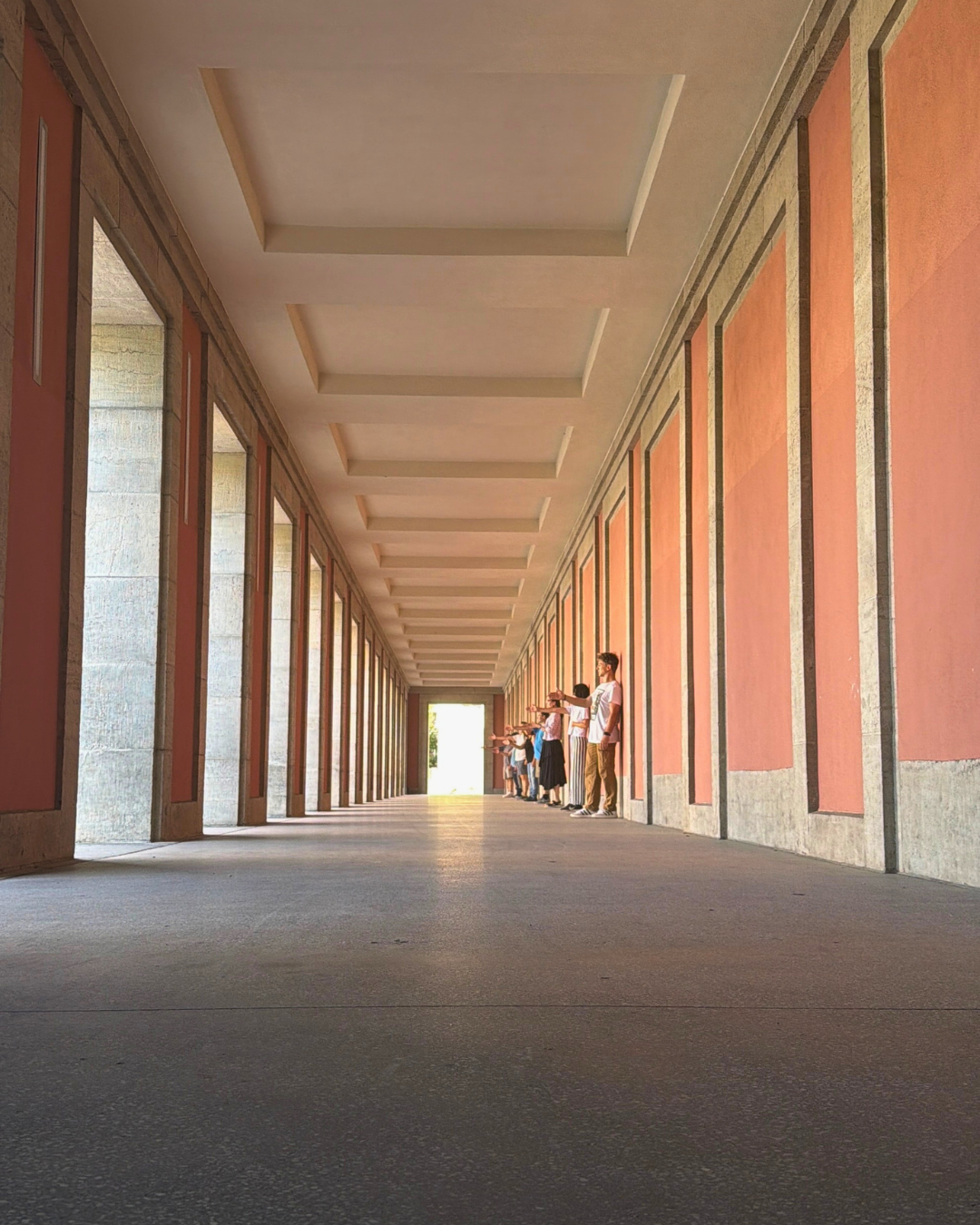
What surprised me most was not the performance itself, but the transformation that had already happened before it. By the time we arrived to the selected location to inhabit it together, the performance felt less like something we were presenting and more like something we had already become. Standing, moving and responding collectively did not feel imposed upon the city. It felt like another conversation already taking place within it. Public performance often asks people to look. This experience asked us first to listen. To the architecture. To one another. To the subtle negotiations constantly taking place between individual bodies and collective presence. Some passers-by slowed down. Some smiled. Some looked away. Some simply continued walking. Every response became part of the work, reminding me that public space is never a stage separated from its audience. It is a living ecology of encounters, interruptions and shared attention. Perhaps this is why embodied practices matter so deeply today.
In a world increasingly mediated through digital interfaces, reconnecting with the body is not an act of withdrawal but an act of participation. The body is where trust begins before language. It is where belonging first announces itself - not as an idea, but as a sensation. A relaxed shoulder. A shared rhythm. The confidence to occupy space without needing permission.
This way of learning feels particularly relevant at a time when education often privileges information over experience. Knowledge certainly matters, but there are things that cannot be fully understood until they are lived. Trust. Presence. Collective awareness. Belonging. They emerge through practice rather than explanation. Perhaps this is one of the enduring gifts of Weimar itself. From the humanist ideals of Johann Wolfgang von Goethe and Friedrich Schiller to the experimental pedagogy of the Bauhaus, the city has long invited people to ask not only what we know, but how we come to know it. And perhaps this extends even further.
When we reconnect with our bodies, we do not only reconnect with ourselves. We reconnect with everything our bodies are constantly in dialogue with: the ground, the air, the architecture surrounding us, the people whose movements subtly influence our own. The body is never isolated. It is always already in relationship. Maybe that is what public space is ultimately for - not simply to move through, but to remember that we are always moving with.